
Why “When Everyone Swims” Came to the Rivi
On Thursday, September 3, The Riviera Club Foundation brought the documentary “When Everyone Swims” to The Rivi.
There was a movie screen beside the pool, pizza and salad for visiting families and plenty of children taking advantage of the pool’s cool water on a hot evening.
But the reason for the event was much bigger than a movie night.
The Foundation wanted to start a conversation about something that can be easy to overlook when you spend your summers at the Rivi:
Not everyone grows up knowing how to swim.
Not everyone has access to a pool.
And sometimes, the difference between knowing how to swim and not knowing can be the difference between life and death.
“When Everyone Swims” asks us to think differently about drowning. Rather than seeing it simply as a tragic accident, the film examines it as a preventable public health issue — and swimming not simply as a sport or recreation, but as a life skill.
As Olympic swimmer and film participant Summer Sanders says, “It is essential for everyone to learn how to swim. Everyone deserves a place in swimming. It is a life skill.”
One participant shares a family history that stretches across generations: an ancestor who was able to escape slavery because he could swim and, generations later, a great-uncle who lost his life because he could not.
Another story follows a young black swimmer who wanted to compete but discovered his new school, Shortridge High School, didn’t have a boys swim team. So he and his mother helped create one.
Those stories illustrate something swimming families may never consider: access to swimming has never been evenly distributed.
For some of us, learning to swim happened almost automatically. Our parents signed us up for lessons. We spent summers at a pool. We joined a team. Someone taught us.
For many other families, those opportunities simply haven't existed.
That is one reason The Riviera Club Foundation does the work it does today.
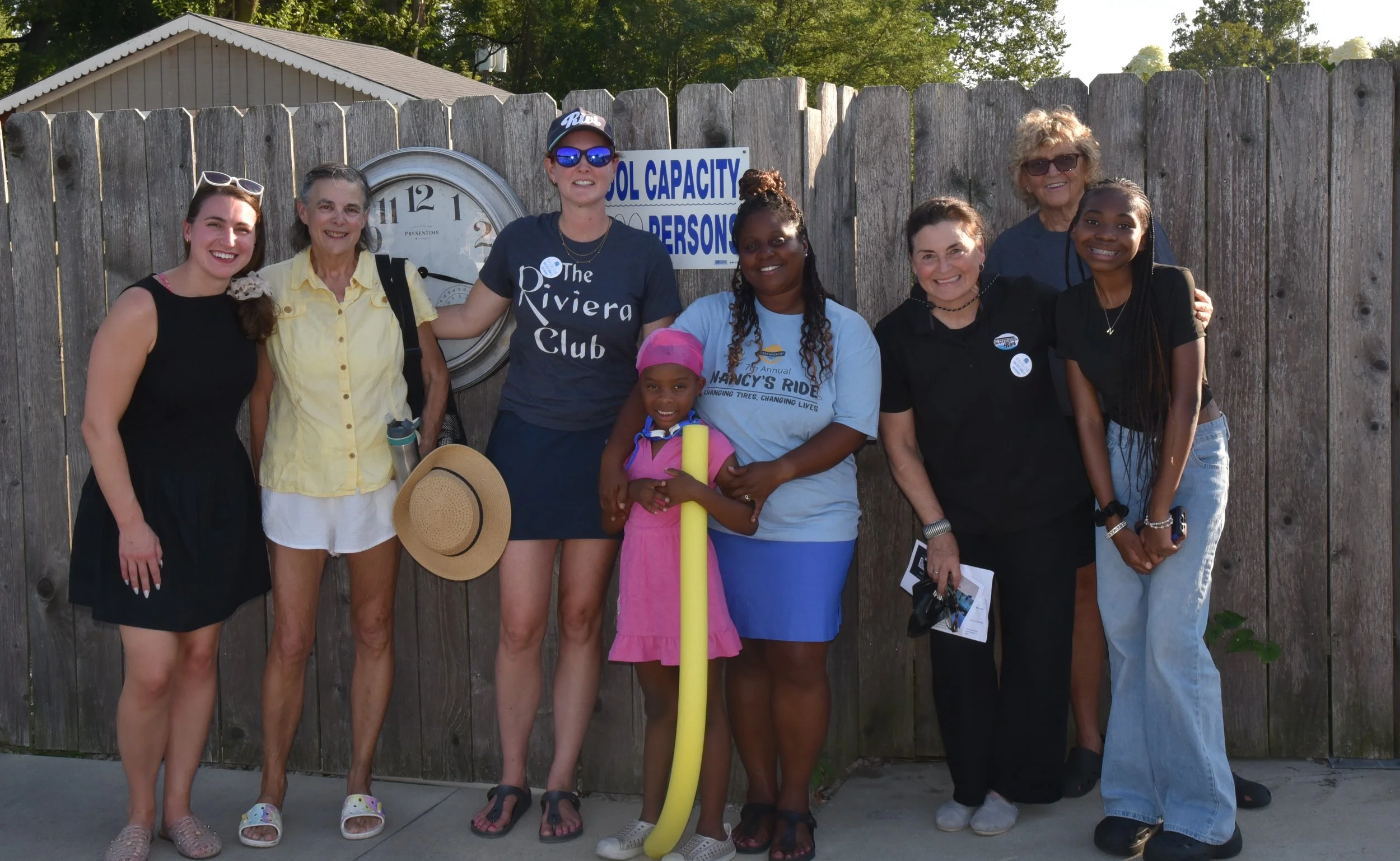
Before the film started, representatives from the Foundation’s community partners, including IPS, Freewheelin' Community Bikes, SHEroes and Christel House Academy, joined Foundation leaders, Rivi Members and community guests to talk about what access looks like in real life.
Leslie Ring of Christel House Academy West provided the story of a student who began lessons afraid even to put his face in the water. Six weeks later, he was diving to the bottom of the pool for rings. Other students, she said, progressed from the shallow end to swimming laps across the pool.
“Without our partnership with The Riviera Club, many of our students would not have access to swim lessons or a pool to practice swimming,” she said.
A representative from SHEroes described searching for years for a partner where girls in the program could learn to swim and gain confidence in the water.
Now they have one.
Those partnerships matter not only because of what they provide today, but because of the history of swimming access in our country — and here at The Rivi.
Longtime Member Ellen Rice spoke candidly about that history before the film.
Ellen and her husband, Fred, joined the Rivi in 1980 as one of the Club's first interracial families. For much of the Rivi's earlier history, people of color and people from certain religious and ethnic backgrounds were not welcomed as Members.
That meant families were excluded from the friendships, recreation and community that existed here.
It also meant they were excluded from the pool.
And when access to pools is limited, access to learning how to swim is limited with it.
“The way things were here at Rivi before 1980 is not the way things are now,” Ellen told the crowd.
That distinction matters.
Today's Rivi is not the Rivi of that era. But acknowledging change does not require pretending our history didn't happen. It requires understanding it, learning from it and continuing to make choices that reflect the kind of Club and community we want to be.
Ellen also reminded Members that she and Fred didn't help change the Rivi so future families would continue to stay away because of its past.
They helped change it so those families could come.
That may have been one of the most important messages of the evening.
Progress isn't simply distancing ourselves from what happened before. It is deciding what we do differently now.

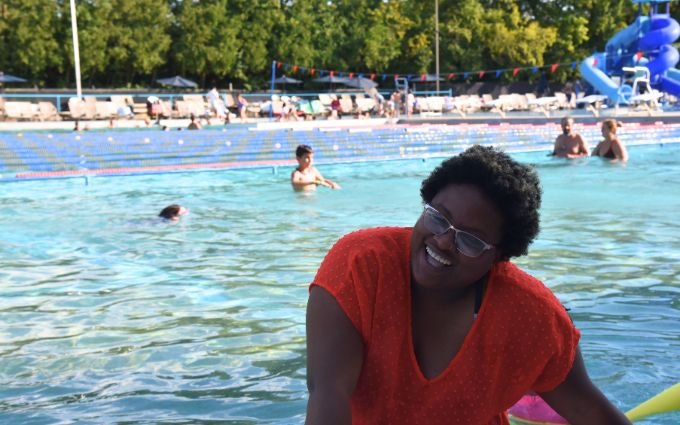
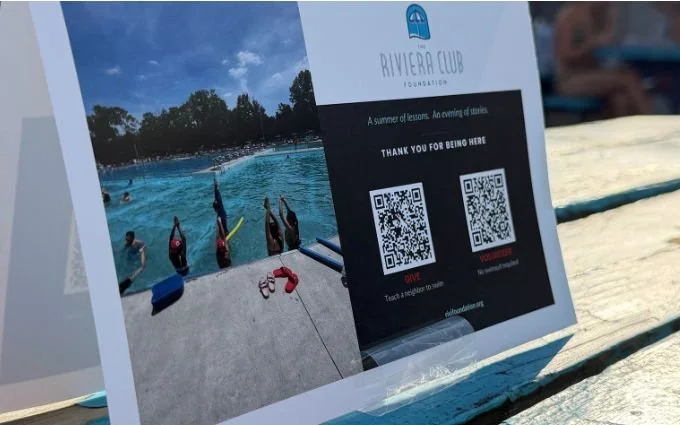
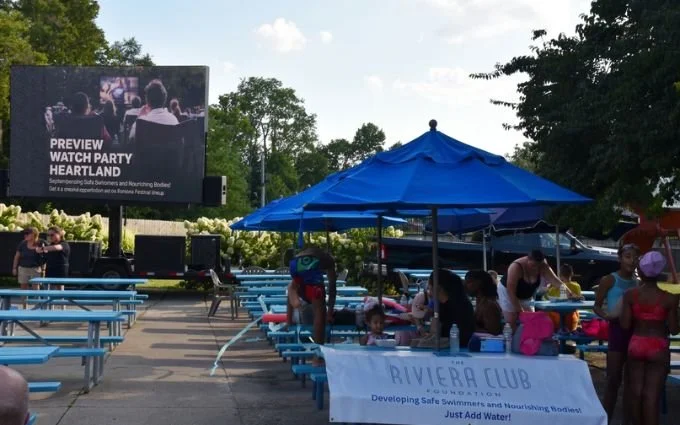
For the Foundation, part of that answer is opening Rivi's pool to children and families who might otherwise never have the opportunity to learn here.
It is partnering with schools and community organizations that can reach people beyond our membership. It is teaching water safety outside the Club and teaching swimming inside it.
And it is continuing to listen, learn and consider how the Rivi can be a better resource to a broader community.
There was another fitting connection Thursday evening.
Jessica Chapman, Director of Marketing & Communications for Heartland Film, introduced the screening. Jessica considers the Rivi home. She learned to swim here and spent 14 years on the Rivi swim team before building a career that now includes helping bring stories like “When Everyone Swims” to audiences.
Her story is one example of what access to swimming can make possible.
The children who came to the Rivi Thursday evening are writing their own stories. Some may become competitive swimmers. Some may never race a lap in their lives. But each deserves the opportunity to learn how to be safe and confident in the water.
The premise of “When Everyone Swims” is simple: swimming should not be a privilege reserved for people who happen to have access to the right place, resources or opportunities.
The water belongs to everyone.
The Rivi cannot change its past. We can decide what we do with it — and what we choose to do every day moving forward.
One way forward is making sure more people have the opportunity to get in the water.
__
Please help The Riviera Club Foundation make that possible. Every volunteer and donation help bring swimming and water-safety education to more people in our community.
