
Sabra Leamnson, a Rivi Member since the early 1980s, watched her three children grow up at the Club. One of the moments she remembers most clearly began when her son Cole noticed a boy from another school who was there alone.
That Sunday, none of Cole’s friends were there either. He approached the boy and started talking with him. When the boy said he didn’t have any friends there, Cole responded simply: “Well, you’ve got one now.”
Then they went off together.
No parent arranged the introduction. One child saw another who needed a friend and knew how to become one.
For generations of families, moments like that have been part of growing up at The Rivi. Children learn to swim, join games, meet people and gradually venture farther from their parents.
The club gives children something increasingly difficult to find: a place where they can practice being independent without being entirely on their own.
For Sabra’s family, The Rivi helped make their busy summers work. Her older children Katie and Tyler attended tennis camp in the morning, had lunch at the Beach Stand and swam with friends in the afternoon.
“They were in a safe place,” Sabra said. “There were adults in charge there. And yet, they would have each other and feel independent.”
She remembers middle schoolers from various schools would arrange their own pick up basketball games in the Rec Building on rainy days. One summer, a group of boys created a water baseball game in front of the Beach Stand. The old bridge became part of the field, a spongy ball served as the baseball and children lined up for a chance to play.
The Club did not organize the game. Adults did not manage it. The children made it their own.
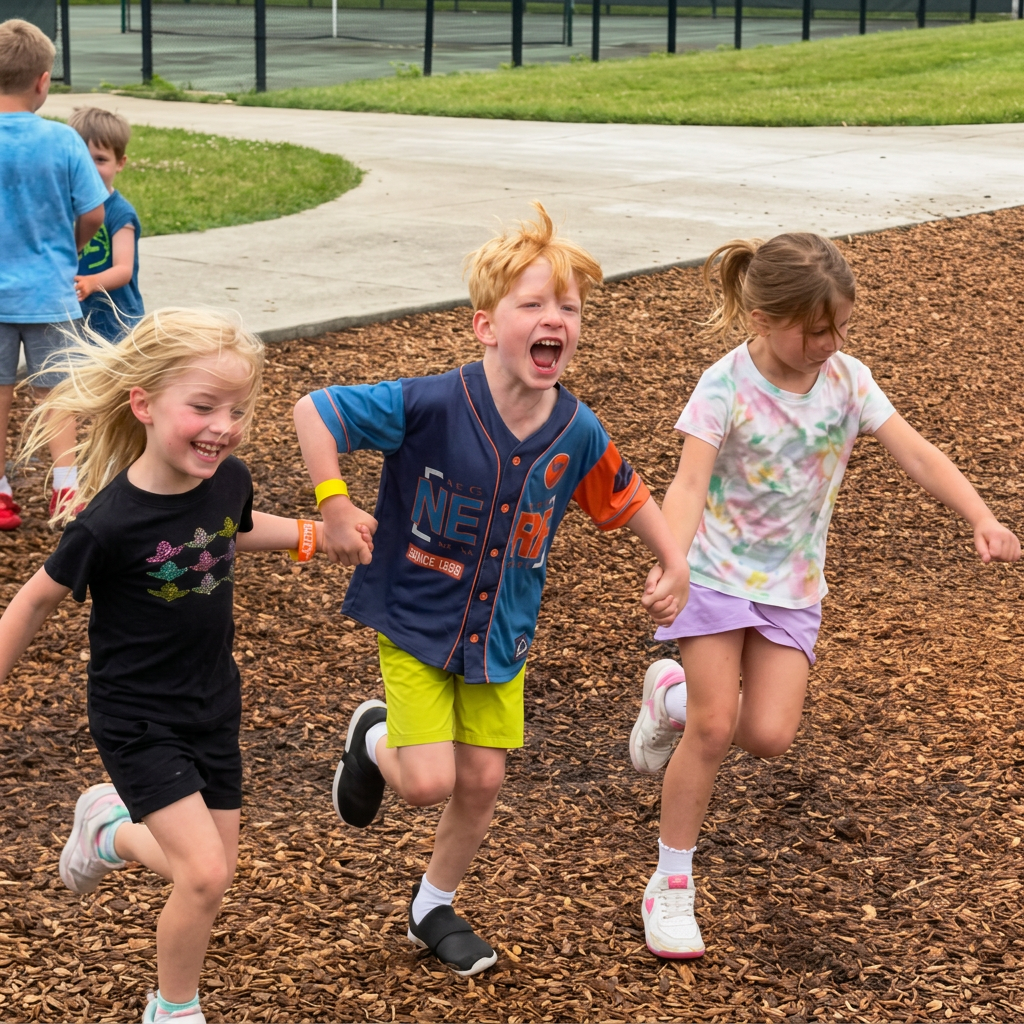
That balance of freedom and boundaries is part of what makes The Rivi different from a backyard pool or an afternoon at home. Children can move independently, but a community is still around them.
Sabra recalls another mother telling her how excited her son had been when one of the older boys invited him to play second base. It was a small moment, but it mattered. Children were learning how to welcome someone, join a group and find their place within it.
That independence develops one experience at a time.
Paige Cardamon shared that The Rivi is where her 5-year-old “gained confidence to pass his swim test and jump repeatedly off the high dive.”
Passing a swim test and jumping from the high dive are more than summer milestones. They are opportunities for children to confront challenges and discover they can do things that once frightened them.
For other children, independence means choosing lunch at the Beach Stand without a parent beside them.
Cole learned an especially memorable lesson there. He believed food charged to the family account was included in the family’s membership. When friends didn’t have money for lunch, he generously offered to buy their food, too.
The Beach Stand bill eventually revealed the misunderstanding — and more than $1,000 in charges.
It led to an important family conversation about money. But that’s part of growing up: making a decision, experiencing the consequence and learning from it.
Rivi parents today continue to recognize the value of those experiences. One Member shared an important family milestone: “Our oldest can ride her bike to and from the Rivi alone now. There is not another option that checks these boxes for us.”
Claire Becker remembers making the same journey when she was young. “One of the best parts of summer was riding my bike to Rivi with my towel over my shoulders,” she shared. “Now, as an adult, to see kids in the neighborhood doing the same thing is so cool.”
The bike ride represents more than a way to get to the Club. It is a child’s world becoming just a little larger.
Sabra and her husband waited until their children were ready, determined the safest route and established expectations before allowing them to ride to The Rivi. Then they let them go.
That balance of freedom and boundaries is part of what makes The Rivi different from a backyard pool or an afternoon at home. Children can move independently, but a community is still around them.
Sabra also remembers the simpler family moments. On especially hot days, she would leave work as early as she could and take the children to the club. They would swim, eat at the Beach Stand, swim again and shower before heading home. Sabra would put them in their pajamas before they left because they were often asleep by the time the family reached the driveway.
As her children grew older, high school practices, jobs and teenage social lives took time away from the club. But The Rivi had served a far greater purpose than recreation.
Some of the physical places Sabra’s children knew have evolved. The decks that Tyler painted in saltwater taffy colors are weathered to gray. New processes replaced the basket room where Katie worked. The bridge and “Cracker Box” pool area where kids played baseball have changed, too. The Rivi has never stood still, but its role in children’s lives remains.
Children today still need what the club gave her family: freedom, friendship, responsibility and a community willing to give them room to grow while quietly watching over them.
Sabra put the question plainly: “If you took the Rivi away, what would take its place?”
